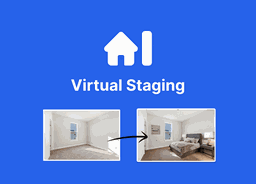
Virtual Staging AI is a browser-based staging tool that takes a photo of an empty or furnished room and returns a version populated with AI-generated furniture, typically within about 15 seconds. It targets real estate agents, brokerages, and listing photographers who want listing-ready images without booking a human designer or renting physical furniture.
The workflow is deliberately simple. A user uploads a room photo, picks a design style, and lets the system generate a furnished version. The same interface can strip existing furniture from a photo before restyling it, which helps when a property is occupied by dated pieces that would distract buyers. The company says results arrive in roughly 15 seconds, a sharp contrast to the multi-day turnaround common among staging agencies. A free trial image is available without an account or credit card, which gives new users a way to judge output quality before committing.
The style library spans more than 50 options, with named looks such as modern, midcentury, Scandinavian, luxury, coastal, and farmhouse. Room categories include bedrooms, living rooms, kitchens, home offices, dining rooms, and outdoor spaces, so the tool covers the shots that tend to anchor a listing gallery. Because each style can be applied to the same room, agents can generate several variations and choose the one that best fits the property's price point and likely buyer.
The pitch rests on speed and iteration. Unlimited regenerations let users rerun a photo until the furniture placement looks right, which matters because AI staging can occasionally produce odd proportions or mismatched shadows. The company markets its output as comparable to human staging, though buyers and agents should still inspect each image for realism before publishing. The tool functions as a lightweight AI design co-pilot for agents who lack interior design training but need presentable visuals quickly.
Pricing is subscription-based and billed annually, with the per-photo rate falling as volume rises. The entry tier runs $16 per month for 6 photos, followed by $19 per month for 20 photos, $39 per month for 60 photos, and $79 per month for 150 photos, billed yearly at $192, $228, $468, and $948 respectively. The top tier adds API access and enterprise support, which suits brokerages and photography teams processing listings at scale. The site's blog also references older monthly figures, so buyers should confirm the current plan terms at checkout.
The company cites industry data that 83% of buyer's agents believe staging helps buyers visualize a property as a future home, and that staged homes tend to sell faster. Virtual staging sidesteps the logistics of moving furniture, paying stagers, and scheduling photo shoots around a staged room. For a fraction of the cost of physical staging, an agent can present an empty unit as a furnished home, which is especially useful for new construction, vacant rentals, and investor-owned properties.
Virtual Staging AI makes the most sense for agents who list frequently and want a repeatable, self-serve process, and for teams that need volume pricing or API access. The trade-offs are familiar to anyone using generative image tools: quality varies by source photo, and the cheapest plan covers only six images a month. Agents should also follow local disclosure requirements and label images as virtually staged. The tool was developed at the Harvard Innovation Lab, according to the company, and it competes with per-photo agencies that charge considerably more for each image.